Control of Convolvulus arvensis with Alternative Herbicides to Glyphosate in Pre-Planting under Conventional Tillage in Bean-Sorghum Rotation: North of Tamaulipas
DOI:
https://doi.org/10.28940/terralatinoamericana.v44i.2117Keywords:
contact, ef fectiveness, hormonal, synthetic, systemicAbstract
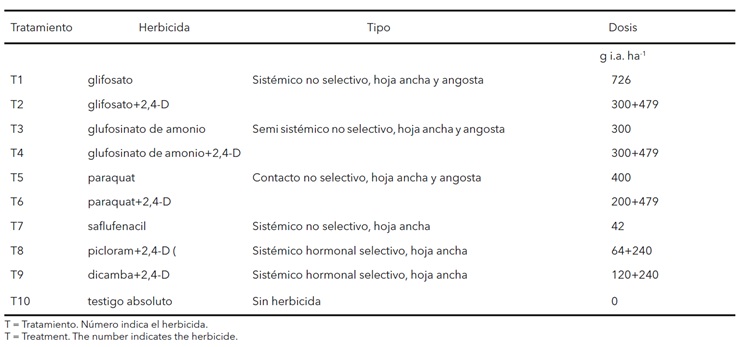
Field bindweed (Convolvulus arvensis L.) is a perennial broadleaf weed of agronomic importance in northern Tamaulipas, particularly during the early growing season of sorghum and maize. The present study aimed to evaluate the ef ficacy of synthetic herbicides as alternatives to glyphosate for controlling field bindweed prior to sorghum sowing under conventional tillage and rainfed conditions in a bean–sorghum rotation. Trials were established in Río Bravo, Tamaulipas, in plots of 20 × 300 m (6000 m²) per treatment, with applications on December 17, 2021 (O–I, 2021–2022), and March 3, 2023 (O–I, 2022–2023). The herbicides evaluated (g a.i. ha–¹) were glyphosate; glyphosate + 2,4-D; glufosinate ammonium; glufosinate ammonium + 2,4-D; paraquat; paraquat + 2,4-D; saflufenacil; picloram + 2,4-D; dicamba + 2,4-D; and an untreated control. At the end of the evaluation period, field bindweed was the dominant species, while other weeds included Amaranthus palmeri, Helianthus annuus, Parthenium hysterophorus, and the perennial Solanum elaeagnifolium. Precipitation was the climatic factor showing the greatest variation between cycles, af fecting herbicide ef ficacy. In 2021–2022, glyphosate control was moderate (76–86%), similar to that of other treatments, whereas in 2022–2023 it was poor to moderate (50–75%), surpassing only paraquat. Considering a minimum ef ficacy threshold of 87.5% and treatment cost, the hormonal herbicides picloram + 2,4-D and dicamba + 2,4-D were identified as the most ef fective alternatives to glyphosate for managing field bindweed in extensive cropping systems in northern Tamaulipas.
Downloads
Publication Facts
Reviewer profiles N/A
Author statements
- Editor & editorial board
- profiles
- Academic society
- Terra Latinoamericana
- Publisher
- Mexican Society of Soil Science, C.A.

To learn about these publication facts, click 
PF is maintained by the Public Knowledge Project